5 Best ELEGOO Neptune 4 Max Alternatives in 2026
The Neptune 4 Max is a solid printer, but it's far from the only option. Here are 5 alternatives that might actually suit most beginners better.
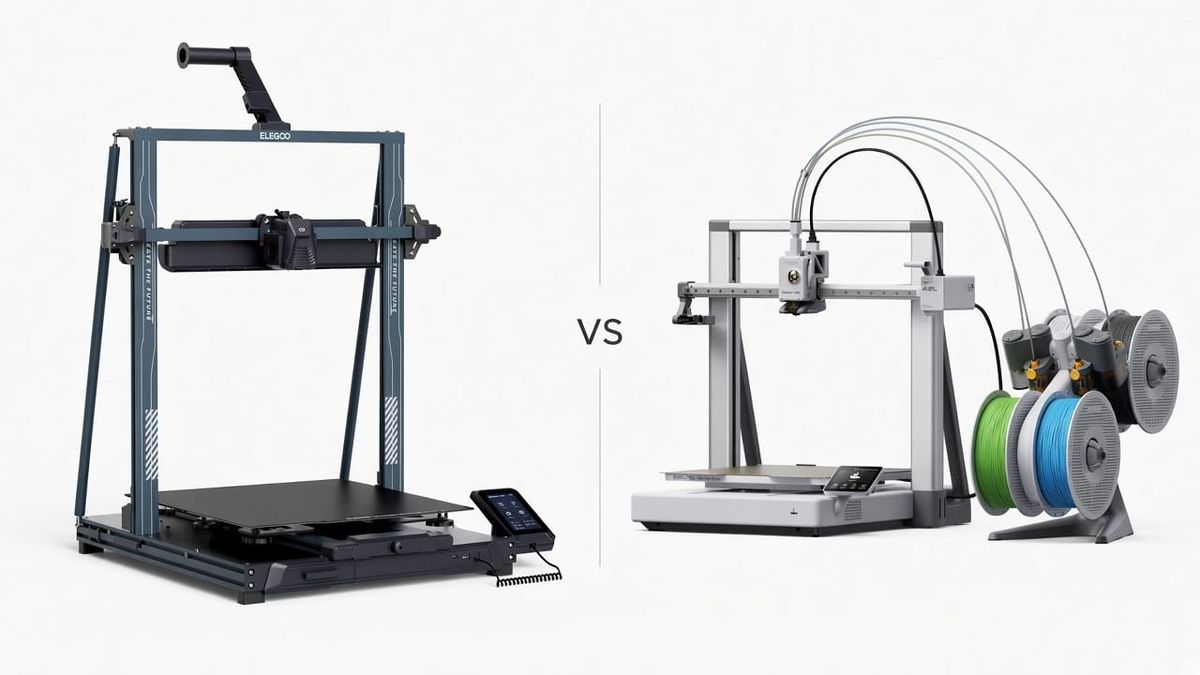
The ELEGOO Neptune 4 Max has earned its spot as one of the most affordable large format 3D printers around. A 420 × 420 × 480 mm build volume for ~$359? Hard to argue with that math.
But after testing it alongside the competition, we found it comes with trade-offs that matter — especially for beginners. No enclosure, no multi-color, basic software, and a smaller community than the big brands. If you're looking for a Neptune 4 Max alternative that better fits your needs, here are five machines worth considering.
Quick Comparison Table
| Feature | Neptune 4 Max | Bambu Lab A2L | Creality K1 Max | Kobra 3 Max | QIDI Max4 | Creality K2 Plus |
|---|---|---|---|---|---|---|
| Price | ~$359 | $469 / $569 Combo | ~$549 | ~$349 | ~$1,049 | ~$999 |
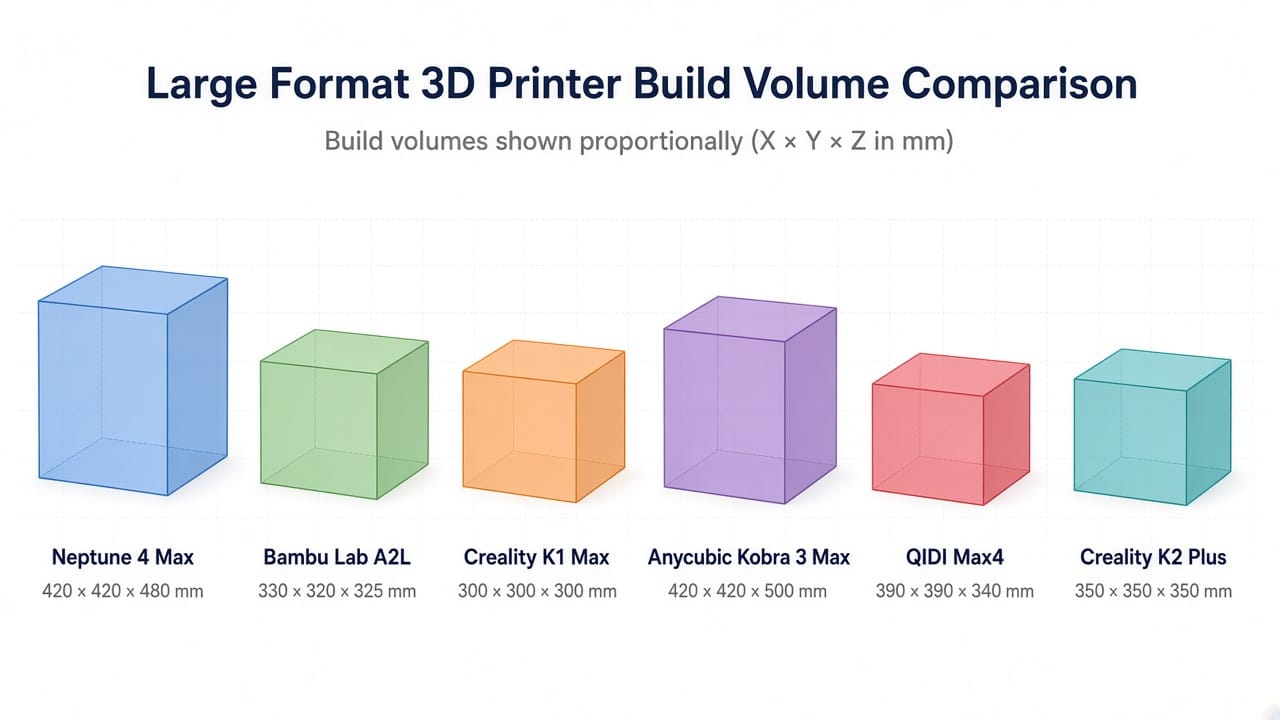
| Build Volume | 420×420×480 | 330×320×325 | 300×300×300 | 420×420×500 | 390×390×340 | 350×350×350 |
| Enclosure | ❌ | ❌ | ✅ | ❌ | ✅ + Heated | ✅ + Heated |
| Multi-Color | ❌ | ✅ AMS (19 colors) | ⚠️ Optional | ✅ ACE Pro (8) | ⚠️ Optional | ✅ CFS |
| Max Speed | 500 mm/s | 500 mm/s | 600 mm/s | 600 mm/s | 800 mm/s | 600 mm/s |
| Key Advantage | Biggest per $ | Best overall UX | Enclosed + fast | Huge + cheap | Engineering grade | All-rounder |
Why Look for a Neptune 4 Max Alternative?
The Neptune 4 Max isn't a bad printer. But four things give beginners trouble:
- Fully open frame — no protection from drafts, kids, or pets. Warping with ABS is almost guaranteed without a DIY enclosure. (Our enclosed vs. open guide explains why this matters.)
- No multi-color — one nozzle, one color. Period.
- Basic software — Klipper is powerful but not beginner-friendly. No companion app, no camera, no one-click slicer profiles.
- Smaller community — when you hit a stringing issue or need to unclog your nozzle at midnight, Bambu and Creality forums have way more answers.
If you're just learning how to use a 3D printer, these gaps add up fast.
1. Bambu Lab A2L: Best Overall Alternative
Price: $469 standalone · $569 with AMS Lite
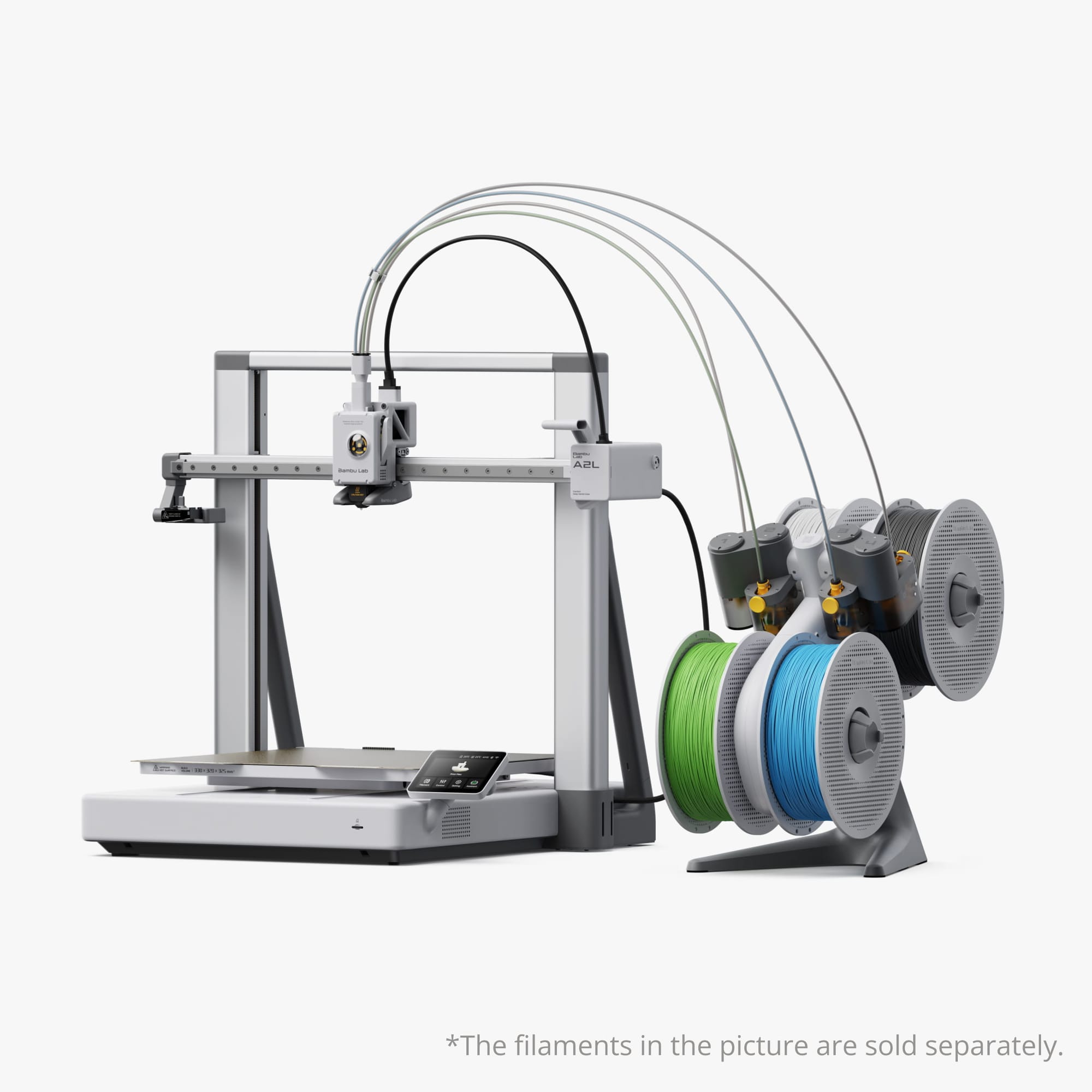
If we could only recommend one Neptune 4 Max alternative, it'd be the A2L. Setup took us 15 minutes. The full-auto calibration — leveling, Z-offset, flow dynamics — runs before every print without you touching anything. The servo extruder catches clogs mid-print before they waste hours of filament. Bambu Studio is the most polished slicer in the business, and the companion app lets you monitor prints remotely with a live camera feed.
The AMS Lite Combo ($569) adds multi-color printing — up to 19 colors across multiple AMS units. Even basic two-tone prints look dramatically better than single-color. It's the kind of feature that, once you have it, you can't go back.
The trade-off? Build volume. The A2L's 330 × 320 × 325 mm (34L) is noticeably smaller than the Neptune's 84.7L. But in our testing, it handled 90%+ of typical beginner projects — including a full-size Mandalorian helmet in one piece. The 80°C bed also means no ABS. But for most beginners printing PLA and PETG, the A2L is the best large format 3D printer for beginners you can buy in 2026.
2. Creality K1 Max: Best Enclosed High-Speed Option
Price: ~$549
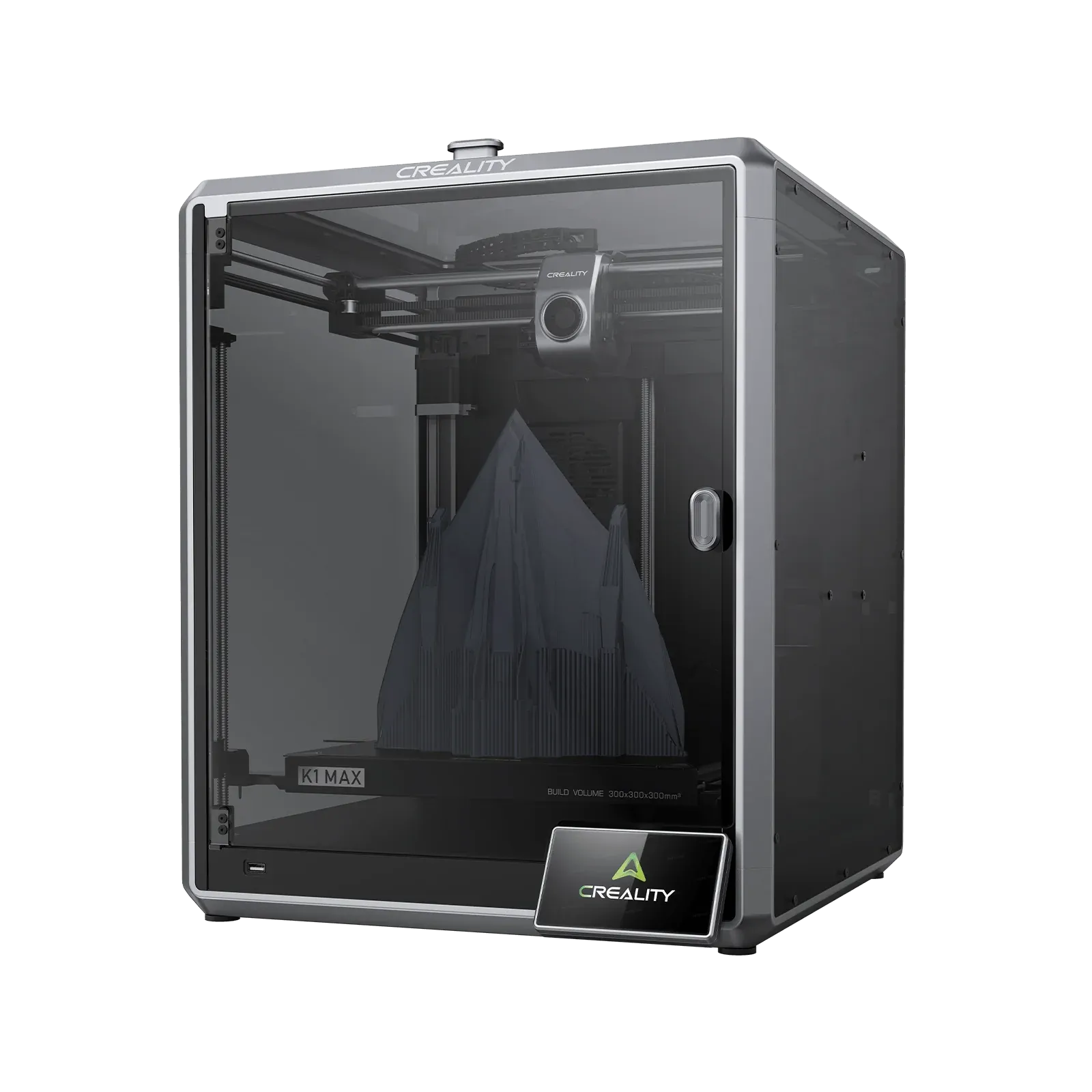
Want an enclosure without spending $1,000? The K1 Max is a fully enclosed CoreXY with a 300 × 300 × 300 mm build volume, 600 mm/s speed, LiDAR auto-leveling, and carbon filtration. The enclosure makes ABS and ASA printing viable — no more warping from stray drafts — and the 120°C bed handles everything short of exotic engineering materials.
The downsides: the 27L build volume is significantly smaller than the Neptune's. Multi-color requires a separate CFS purchase. And Creality Print, while improved, still doesn't match Bambu Studio's polish. But as a fast, enclosed, single-color large format FDM 3D printer, the K1 Max punches well above its price.
3. Anycubic Kobra 3 Max: Closest Size Match
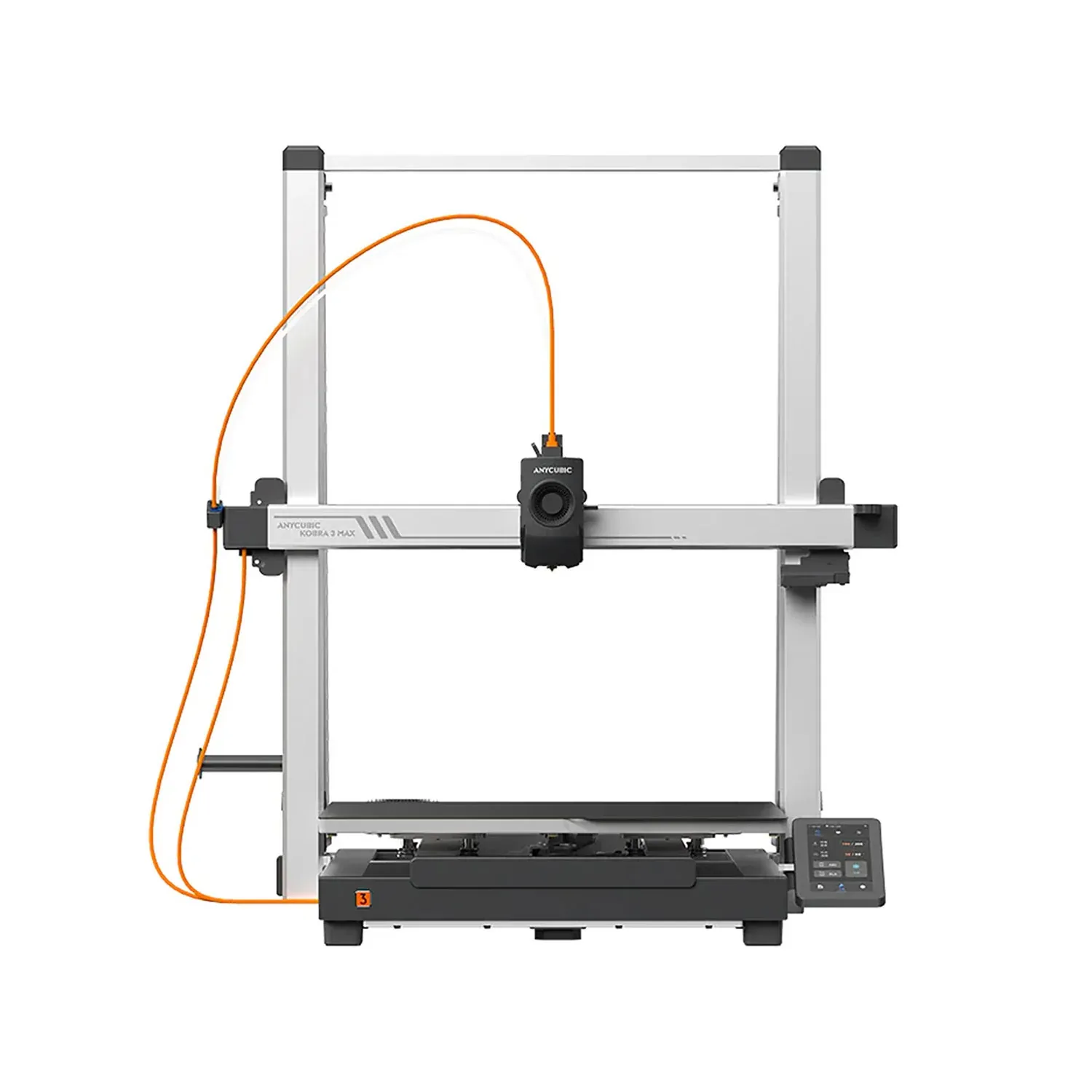
Price: ~$349
If you need a big 3D printer that rivals the Neptune 4 Max on raw volume, the Kobra 3 Max is the one. At 420 × 420 × 500 mm (88L), it's actually taller than the Neptune. It's also the cheapest on this list at ~$349. Optional ACE Pro multi-color (up to 8 colors), 600 mm/s speed, and AI spaghetti detection round out a surprisingly loaded spec sheet. We did a full deep-dive in our A2L vs. Kobra 3 Max comparison.
The trade-offs mirror the Neptune's: open frame, mediocre software, 90°C bed limit. Anycubic's support is also hit-or-miss. But if maximum volume at minimum price is your goal, nothing else comes close.
4. QIDI Max4: Best for Engineering Materials
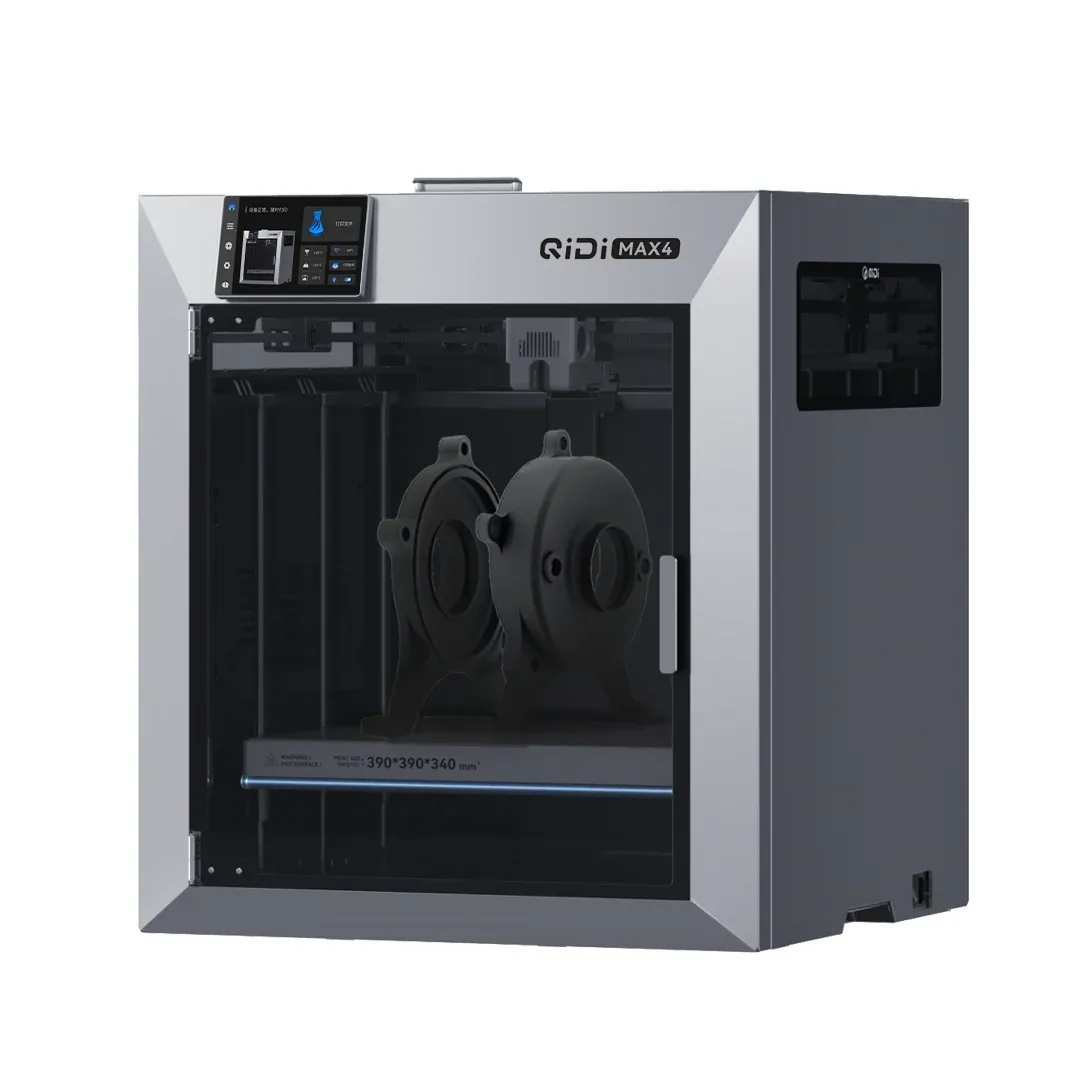
Price: ~$1,049
Every other printer here is optimized for PLA and PETG. The QIDI Max4 is built for ABS, nylon, polycarbonate, and carbon-fiber composites. Fully enclosed with an actively heated chamber (65°C), a 370°C hotend, 120°C bed, and 800 mm/s speed — it's essentially a light industrial 3D printer in desktop form. The 390 × 390 × 340 mm build volume is nearly as wide as the Neptune.
At $1,049, it's roughly 3× the Neptune's sale price and weighs 40 kg. If you mostly print PLA figurines, it's overkill. But for makers who need a large build volume 3D printer that handles engineering-grade materials without babysitting, the Max4 is a tank.
5. Creality K2 Plus: Best Mid-Range Upgrade
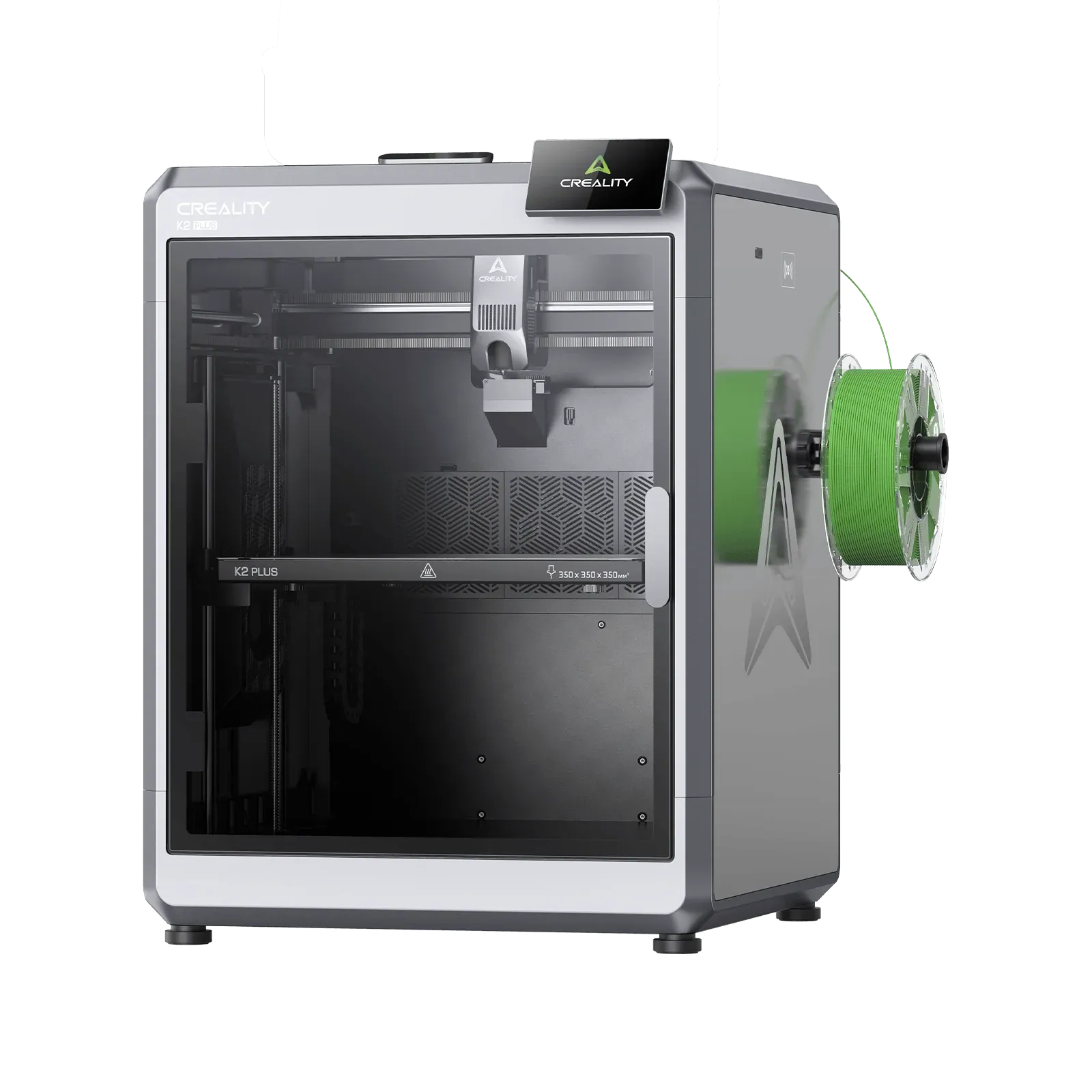
Price: ~$999
The K2 Plus is the "I want everything" machine: 350 × 350 × 350 mm build volume, full enclosure with 60°C heated chamber, CFS multi-color, 350°C hotend, 120°C bed, dual AI cameras, and active belt tensioning. It's the largest 3D printer in Creality's enclosed lineup and one of the most feature-complete printers at any price.
The catch is predictable: ~$999 standalone, ~$1,199 with CFS, and 35 kg of desk-eating hardware. But if you want a no-compromise large scale 3D printer that does PLA through PA-CF with multi-color, the K2 Plus genuinely earns its premium.
Which One Should You Get?
- Most beginners → Bambu Lab A2L ($469/$569) — easiest setup, best software, multi-color. The build volume handles 90%+ of projects.
- Maximum volume → Anycubic Kobra 3 Max (~$349) — 88L for under $350. Nothing else matches this.
- Need enclosure → Creality K1 Max (~$549) for budget, QIDI Max4 (~$1,049) for engineering filaments.
- Want it all → Creality K2 Plus (~$999) — enclosure + multi-color + large volume + high-temp.
For the majority of beginners exploring 3D printing for the first time, the Bambu Lab A2L hits the sweet spot between price, features, and ease of use that the Neptune 4 Max can't match. The build volume trade-off is worth it.
FAQ
Is the Bambu Lab A2L better than the Neptune 4 Max?
For most beginners, yes. The A2L offers full auto-calibration, Bambu Studio, multi-color via AMS Lite, and a built-in camera — all things the Neptune lacks. The Neptune wins on raw build volume (420×420×480 vs. 330×320×325 mm), but the A2L's 330mm handles the vast majority of beginner projects, including full-size cosplay helmets.
What is the best affordable large format 3D printer for beginners?
The Bambu Lab A2L ($469) offers the best balance of build volume, ease of use, and features. If you need the absolute largest build volume on a budget, the Anycubic Kobra 3 Max (~$349) and Neptune 4 Max (~$359) both offer 420mm+ build plates at lower prices — with fewer quality-of-life features.
Is the Neptune 4 Max good for beginners?
It can work, but expect a learning curve. Klipper firmware is powerful but not intuitive. There's no companion app, no camera, and setup requires more manual calibration than competitors. The open frame also causes warping with heat-sensitive materials. If you're comfortable tinkering, it delivers outstanding volume per dollar.
Are large 3D printers worth it?
Yes — if you'll actually print big. A large 3D printer eliminates the need to split models and glue pieces together. But bigger prints use more filament, take longer, and are more prone to failures. For most beginners, a 300-350mm class printer like the A2L covers everything you'll realistically print in year one.
Comments ()