Best Laser Engraver for Small Business in 2026
Reliable laser engravers for small shops, plus the products that actually pay back.
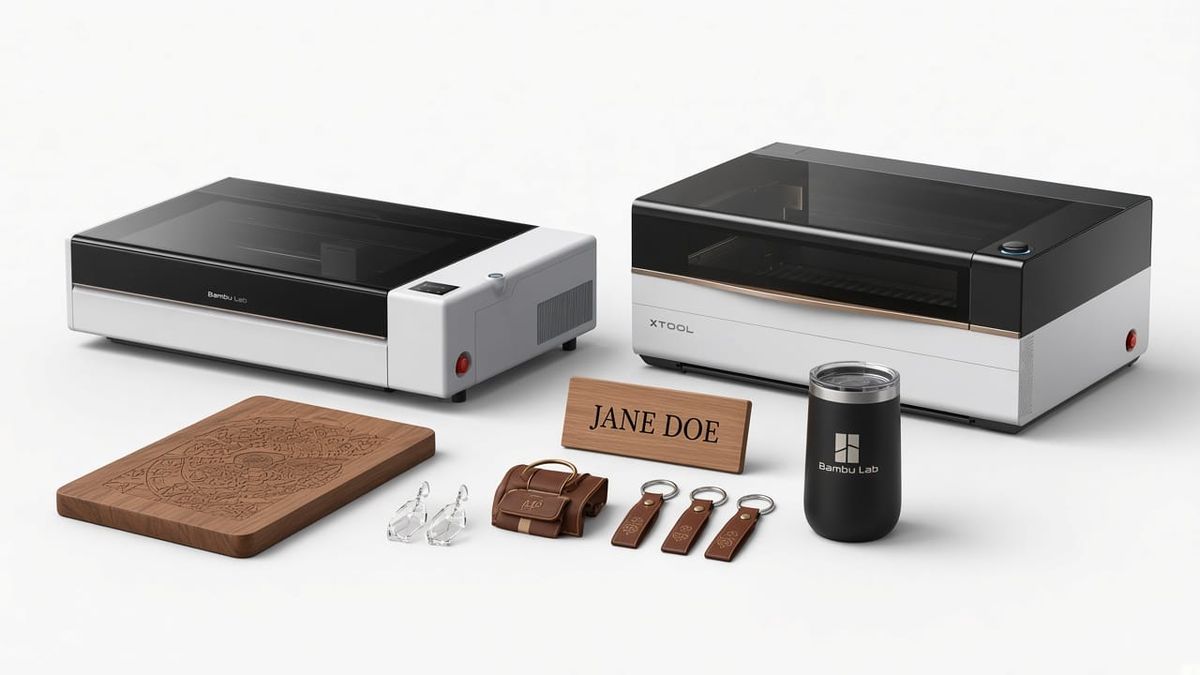
If you are shopping for a machine that can run daily orders without constant babysitting, reliability beats raw wattage. For most product shops selling wood, acrylic, and leather, the best laser engraver for small business in 2026 is a 55W enclosed CO2 laser like the Bambu Lab R1. This guide covers what “reliable” actually means, which machines fit that bar, which products make money, and when diode or fiber makes more sense.
What Makes a Laser Engraver Reliable for Small Business?
A laser engraver for small business has one job: finish paid work on schedule. Judge machines on these four points:
- Uptime — Auto calibration and fewer manual optical tweaks mean less downtime between orders.
- Shop safety — Class 1 enclosed machines are easier to run in a home studio or shared workshop without goggles for every job.
- Batch consistency — Camera placement and saved presets help repeat the same cutting board or keychain order with matching quality.
- Throughput vs footprint — A ~600 × 300 mm bed covers most Etsy and local gift products without jumping straight to an industrial floor machine.
If you want a deeper CO2 model comparison, see our CO2 laser cutter guide.
Best Laser Engravers for Small Business (2026 Picks)
These are the best laser engravers for small business if you care about reliability first:
| Pick | Machine | Type | Price | Best For |
|---|---|---|---|---|
| Best overall | Bambu Lab R1 | 55W CO2 | $2,499 | Wood, acrylic, leather shops |
| Best for scaling | xTool P3 | 80W CO2 | ~$4,999 | Signs and higher volume |
| Best metal add-on | Entry fiber desktop | Fiber | ~$2,000+ | Jewelry and metal marking |
Bambu Lab R1: Best CO2 Laser Engraver for Small Business
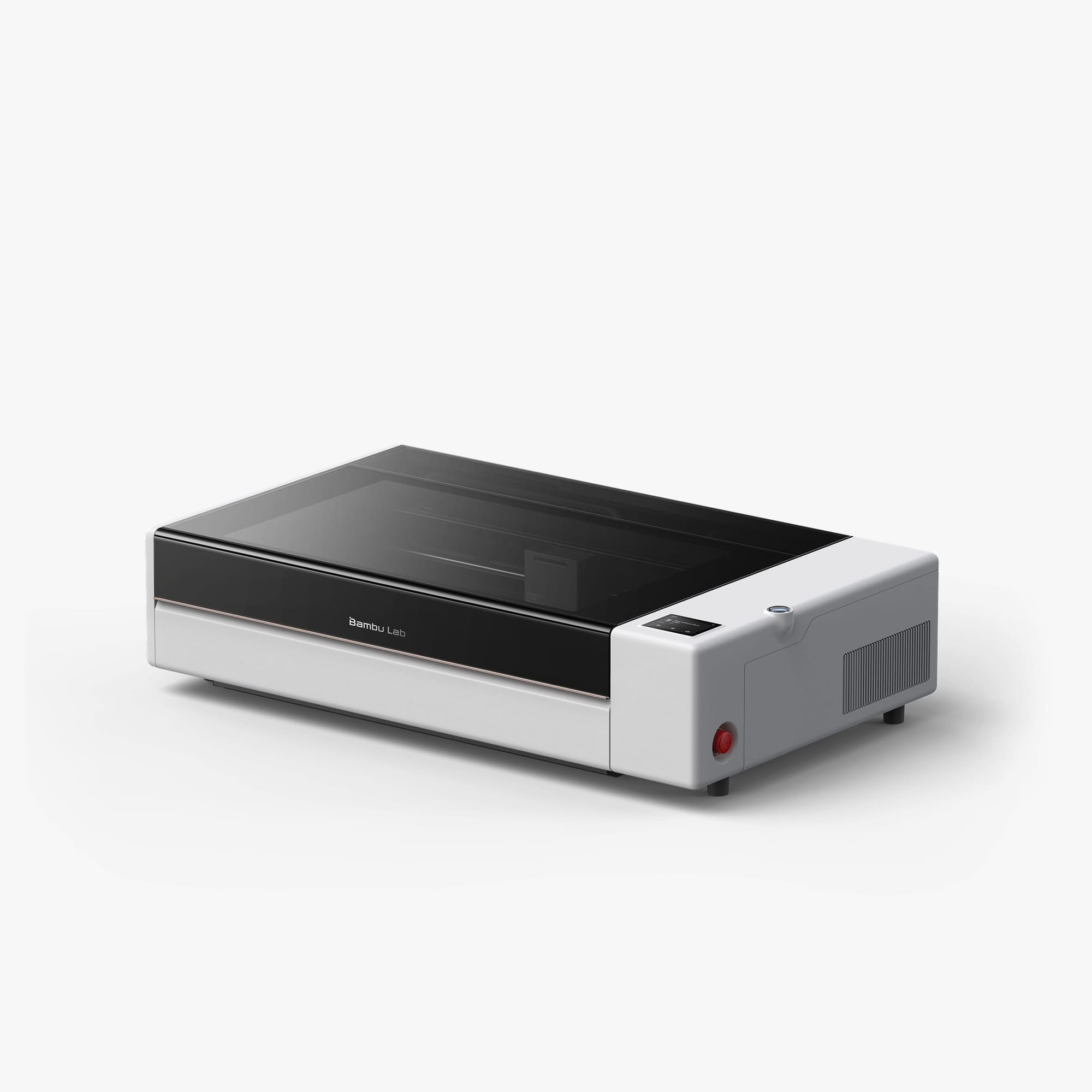
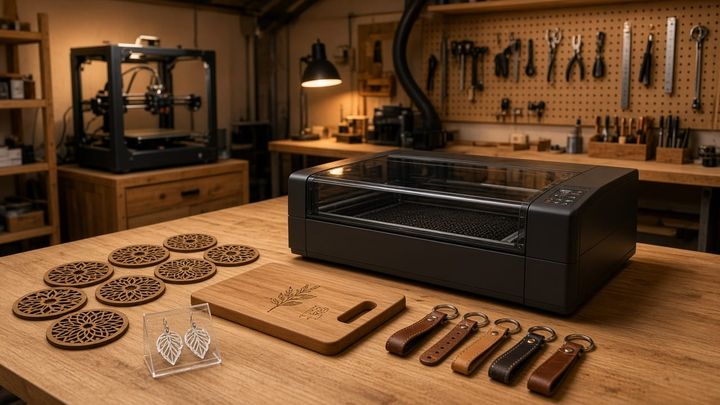
The Bambu Lab R1 is the best CO2 laser engraver for small business buyers who need serious cutting power without a steep learning curve. It is a 55W CO2 machine with a 600 × 300 mm work area (expandable to 3,000 mm with the conveyor), automatic optical path calibration, BirdsEye camera positioning, and Class 1 enclosed operation.
That mix is why it also works as the best CO2 laser for small business starters: you spend less time aligning mirrors and more time shipping orders. It cuts wood up to about 18 mm and acrylic up to about 20 mm in a single pass, and engraves glass, ceramic, and coated metal.
Best for: one-person shops making wood signs, acrylic awards, leather goods, and personalized gifts.
✅ Auto calibration · Strong 55W CO2 value · Camera placement · Class 1 enclosure
❌ Loud fans · Bambu Suite only for now · Optional lens for thicker stock
Bottom line: If you need a reliable laser engraving machine for small business work in wood and acrylic, start with the R1 before spending $5,000 on a production floor unit.
When to Step Up to the P3 or Add Fiber
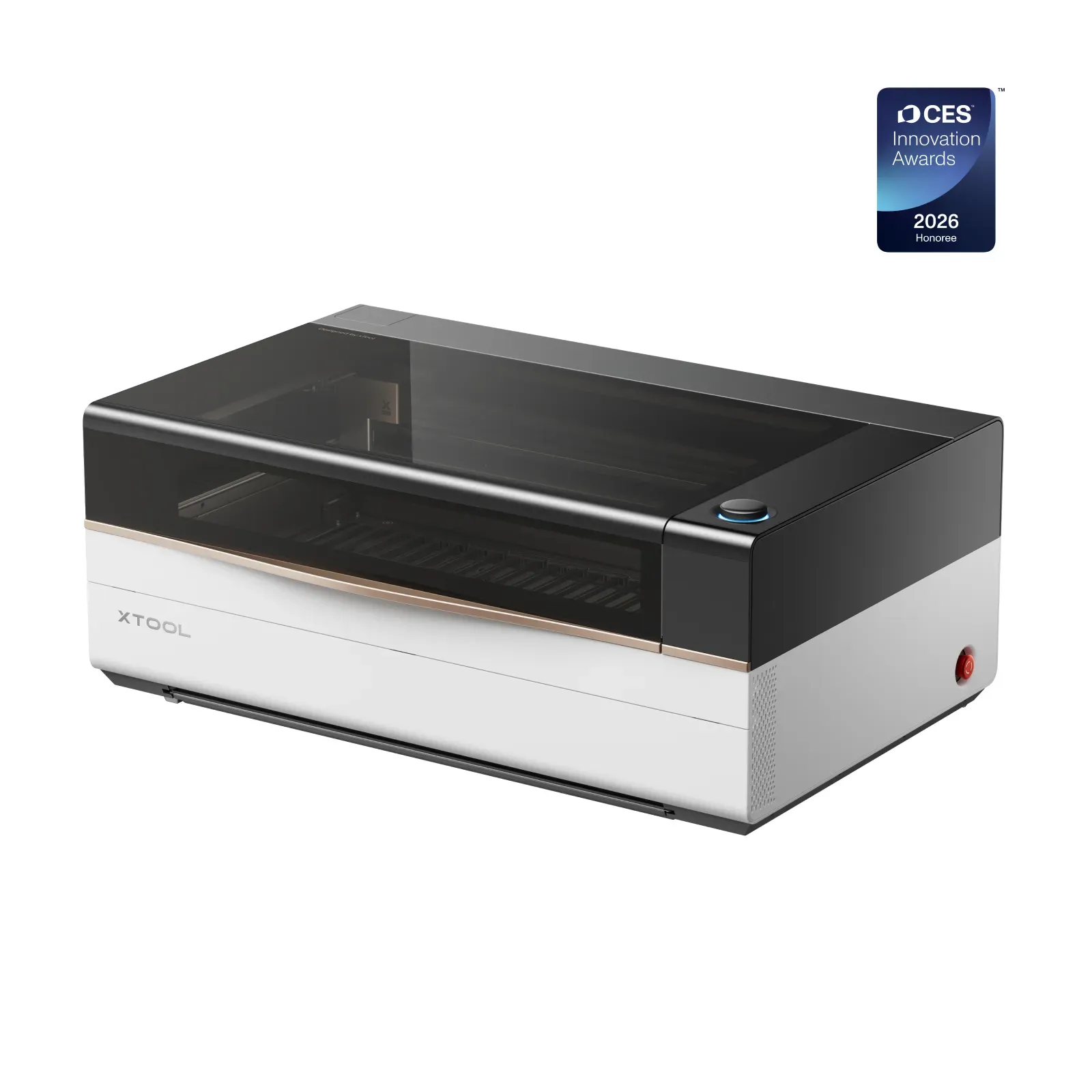
Choose the xTool P3 when bed size and weekly volume become the bottleneck: full-sheet signage, furniture panels, and wholesale batches fit better on its larger 80W platform.
Add a fiber laser only when metal is a core product line. CO2 is weak on bare metal; fiber is built for jewelry tags, tumblers, and industrial marking. Many shops run CO2 for gifts and add fiber later instead of forcing one machine to do everything.
Most Profitable Laser Engraved Items
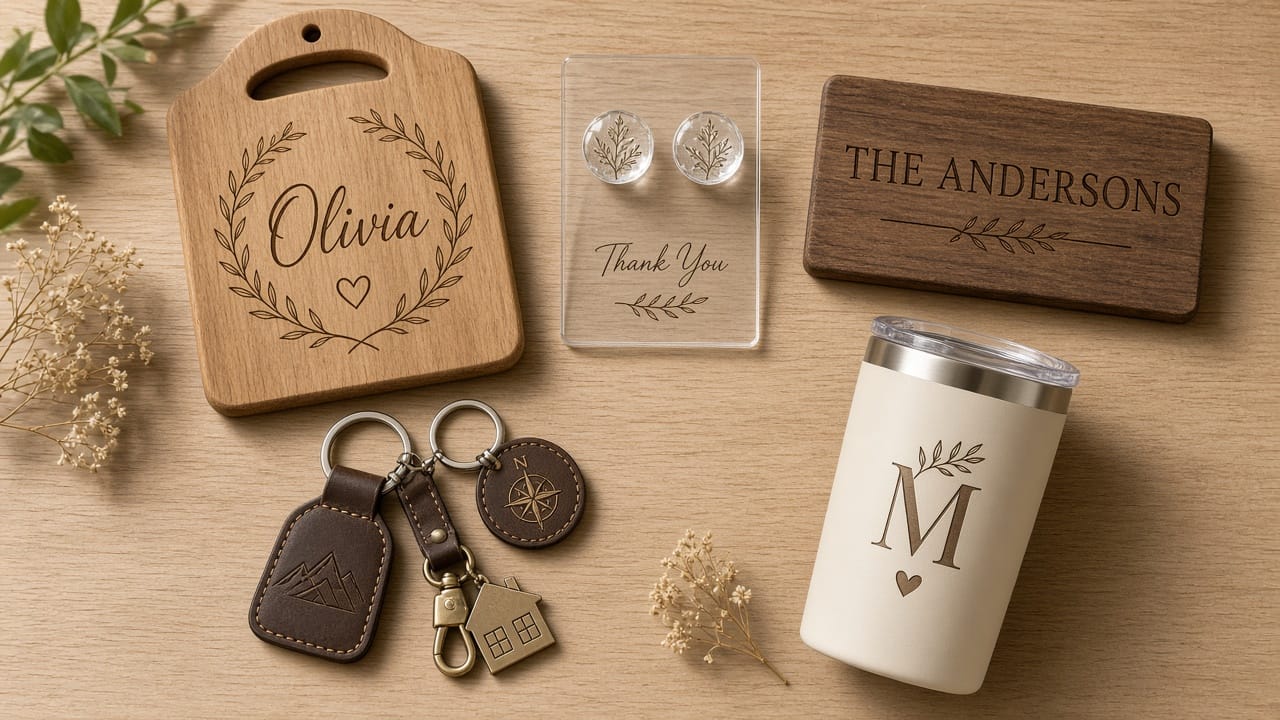
Is a laser engraving business profitable? It can be, if you sell personalized items with low material cost and high perceived value.
| Product | Typical Sell Price | Material Cost | Why It Works |
|---|---|---|---|
| Personalized cutting boards | $30–$60 | $3–$8 | Evergreen gift demand |
| Acrylic earrings / charms | $12–$25 | $0.50–$2 | Fast batches, low waste |
| Wood name signs / door plaques | $25–$80 | $2–$10 | Local + online orders |
| Leather keychains / wallets | $15–$45 | $2–$8 | Premium feel, quick turnaround |
| Engraved tumblers (rotary) | $25–$45 | $5–$12 | High perceived value |
The most profitable laser engraved items are usually not the most complex. They are repeatable SKUs you can personalize in minutes. At five cutting boards a week and ~$32 profit each, a $2,500 machine can approach payback in roughly four to five months before ads and platform fees.
CO2 vs Diode vs Fiber for a Small Business
| Type | Good Business Fit | Weak Spot | Who Should Buy |
|---|---|---|---|
| Diode | Trial runs, dark acrylic, light wood engraving | Clear acrylic and thick wood | Budgets under ~$1,000 testing demand |
| CO2 | Wood + clear acrylic + leather product shops | Bare metal | Most small businesses |
| Fiber | Metal jewelry, tools, industrial tags | Cutting wood/acrylic | Metal-first catalogs |
Diode is fine for validating an idea. Once orders include clear acrylic or thicker wood, CO2 becomes the production tool. Fiber is a specialist add-on, not a replacement for a gift shop CO2 workflow.
FAQ
Is a laser engraving business profitable?
Yes, if you focus on personalized products with cheap materials and steady local or Etsy demand. Many small shops target payback within 3–6 months at a modest weekly volume.
What are the most profitable laser engraved items?
Cutting boards, acrylic jewelry, wood signs, leather goods, and engraved drinkware. See the table above.
What is the best laser engraver for beginners in 2026?
For a real product business, an enclosed 55W CO2 like the R1. For a low-risk test, a diode under $500 can validate demand first.
Is LaserGRBL or LightBurn better?
LaserGRBL is free and fine for basic diode work. LightBurn is better for paid production workflows. Brand suites like Bambu Suite can replace LightBurn on supported machines if you want a simpler all-in-one path.
Comments ()