Enclosed vs Open 3D Printer: Which Should You Choose
Enclosed traps heat; open lets it escape. Which setup actually matches the way you print? We break it down.
From model to specifications, several things differentiate 3D printers. One key factor is whether a 3D printer is enclosed or open. Most of you might not be aware that an open-frame 3D printer leaves the build area exposed, which helps release heat. On the contrary, an enclosed 3D printer traps the heat.
Choosing between enclosed and open 3D printers can be confusing, but once you have a clear idea of the purpose of a 3D printer with an enclosure, you will know whether it's actually needed.
The following guide provides a detailed description of how an enclosed and open 3D printer differ and how the material, environment, and budget influence your decision. Keep on reading to understand in detail which option is a must-have and why.
What Is an Enclosed 3D Printer?
Before jumping into the discussion of choosing enclosed vs. open 3D printers, one needs to understand what exactly a fully enclosed 3D printer is. An enclosed 3D printer has a sealed chamber or a structure that surrounds the print area. Usually, this surrounding sheet is made from acrylic glass, metal, or a variety of metals.
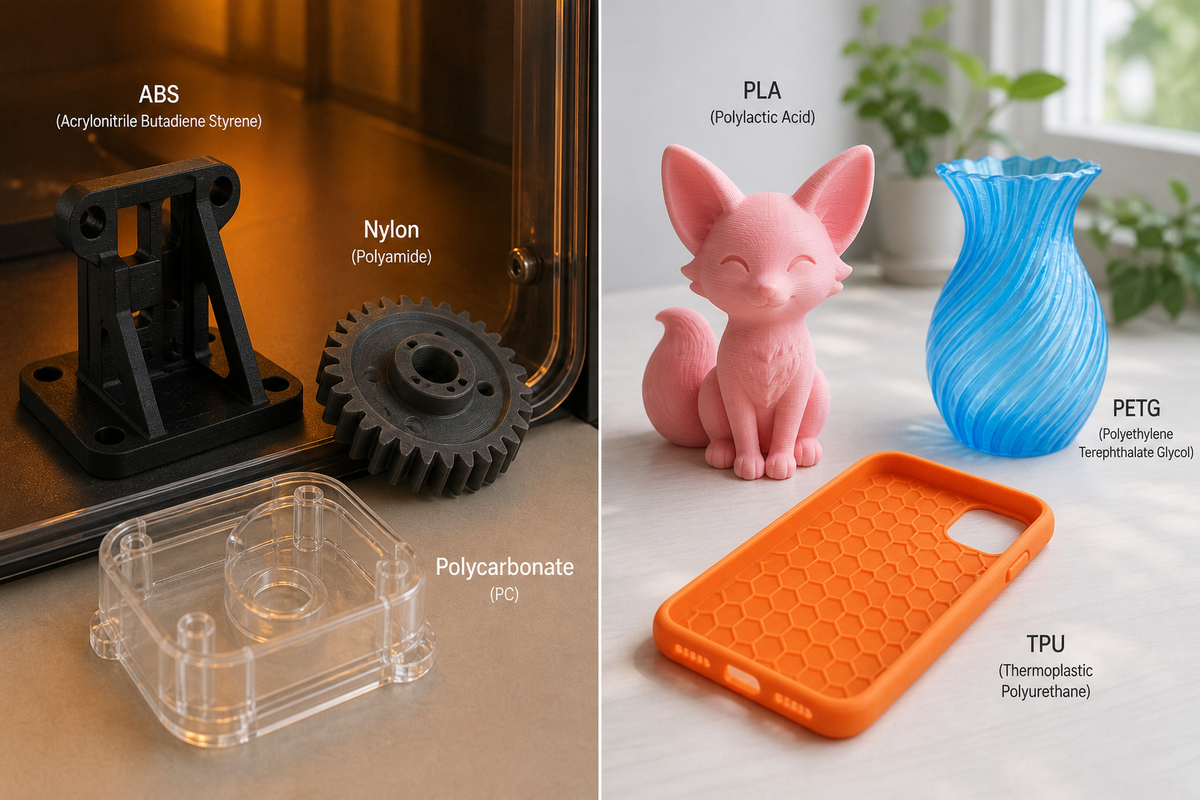
Thanks to the enclosed space, a user can maintain the printing temperature and even avoid warping issues. For example, if you are working with materials like ABS, ASA, Nylon, or PC, a 3D printer with an enclosure will be most beneficial.
In addition to stable heat and reduced warping, an enclosed 3D printer also provides a safety barrier. All the fumes and heat from the printer won't be able to escape, keeping you and your family safe. So, if you need a noise-free, safe system for your home, we suggest an enclosed option.
What Is an Open-Frame 3D Printer?
While enclosed printers have their set of strengths, one also cannot ignore the benefits of open-frame 3D printers. Unlike enclosed ones, these printers have no sealed chambers. The build area is exposed, which ensures maximum airflow.
Therefore, if you like exposed print beds or plan to work with materials like PLA, PETG, or TPU, then an open print bed is the option to go for. Even the cost for these machines is much lower, ranging from around $150-$400. Most importantly, you get 360° access to the machine, making maintenance simple.
Thus, if you’re just beginning your 3D printing journey, an exposed design will definitely be more useful.
Enclosed vs. Open 3D Printer: Key Differences
Undoubtedly, each option has its own benefits and downsides, so neither one is perfect. However, if you need to decide between these two options, we recommend looking at these 5 factors.
Material Compatibility: The Purpose of a 3D Printer Enclosure
One of the most important elements to notice when comparing enclosed vs. open 3D printers is the material compatibility. If someone is working with PLA, PETG, or TPU, then an open-frame 3D printer is a much better choice.
However, if you are dealing with ABS, ASA, or Nylon, an enclosed FDM 3D printer or any other enclosed model is the only option. The reason is that these materials shrink heavily, and only with stable entrapped heat can one save them from warping.
Once you know the purpose of a 3D printer enclosure, you are in a better position to decide.
Print Quality and Warping
Apart from material compatibility, the print quality and warping problem also differ between open and enclosed frameworks.
Primarily, an enclosed 3D printer not only looks more professional but also provides excellent quality prints. We all know that warping is a major concern in 3D printing, but an enclosure helps prevent it. In fact, an enclosed setup with materials like ABS gives a 90% success rate, which isn't possible with open systems.
Still, that doesn't mean open models produce low-quality items. Open printers can also produce fine-quality prints given the right temperature, material type, and settings. For example, for PLA, an open frame printer produces sharper details than a closed one.
Safety, Fumes, and Noise
While deciding between enclosed vs open 3D printers, one should also check which option is safer, produces less noise, and releases fewer harmful fumes.
With the enclosed printer, there is a physical barrier that prevents any gas or fumes from being released. Thus, it's safe, and the function is much quieter. The best part is that there is no risk of getting burned because everything is enclosed.
Open printers work best in workshops or well-ventilated rooms, since there's no barrier to contain fumes if you're printing higher-temperature materials. So, it's a bit riskier and not suitable for homes with kids around.
Cost
The cost greatly differs between the two systems. Open-frame 3D printers are much cheaper than enclosed ones. You can easily get a quality open-frame 3D printer for $150–$400.
Therefore, people on a budget or who have just stepped into the world of 3D printing can pick this option.
Nonetheless, if you don't have any budget constraints, an enclosed system is best. They could cost more than $1500 but offer safety, prevent accidental burns, and function at the lowest noise level.
Another alternative you could use is a DIY enclosure with an open 3D printer. It costs no more than $100 and fulfils your needs.
Maintenance and Upgrades
Lastly, one needs to go through the maintenance needs and possible upgrades with open and enclosed 3D printers. For open printers, the maintenance is much easier because you have complete access to the system.
The same can't be said for enclosed printers. Here you need to open panels and squeeze through different layers, so it’s a more complicated process.
If you’re one of those individuals who likes to experiment and add to your existing printer, an open frame design will feel more enjoyable.
Does PETG Print Better Enclosed or Open?
Now that you know which factors to look for, you should also know about common materials that work with each option. One particular material that is often worked with is PETG.
In most cases, PETG doesn't require any enclosed setups. Since it contracts less than ABS, warping isn't a major concern when printing with PETG. That's why, with the right bed adjustments, anyone can print PETG without an enclosure.
An enclosure is compulsory for PETG when the print size is large, or there is a cold draft. If these two problems aren't there, no need to buy an enclosed setup just for PETG.
Can You DIY an Enclosure for an Open-Frame 3D Printer?
While mentioning cost, we also mentioned using a DIY enclosure for open-frame setups. That's right, one doesn't have to spend a great amount to buy an enclosed setup, especially when you can use DIY enclosures.
It's one of the most popular upgrades with minimum cost.
Common DIY Options
Some common DIY options include:
- Photography tent: $20–$40
It includes a lightweight enclosure that protects the bed from drafts and temperature changes.
- Acrylic panel kit: $50–$100
A more durable option where one uses transparent acrylic sheets for the enclosure. It offers better insulation.
- IKEA LACK table mod: $30–$60
Here you only need to repurpose existing furniture to create a custom 3D printer enclosure.
Factory Enclosed vs DIY Enclosed, What's the Real Difference?
With DIY enclosures, factory-enclosed setups might seem unnecessary, but that's not always the case. Several factors influence your decision, as shown through the following table.
| Factor | Factory Enclosed | DIY Enclosure |
|---|---|---|
| Chamber Control | Designed specifically for the printer | Depends on the enclosure design |
| Seal Quality | Usually consistent and reliable | Highly variable |
| Filtration | May be integrated into the printer | Must be added separately |
| Electronics Cooling | Designed and managed by the manufacturer | User's responsibility |
| Cost | Higher initial cost | Lower initial cost |
| Modification Flexibility | Limited | Excellent and highly customizable |
Keep in mind, DIY enclosures are not always the best option. At times, excessive heat can raise the temperature of internal components, so you might need to arrange a separate cooling system for them. Likewise, if your goal is to print reliable ABS or ASA at 50°C, then a purpose-built system is the more obvious choice.
Best Enclosed 3D Printer for Beginners
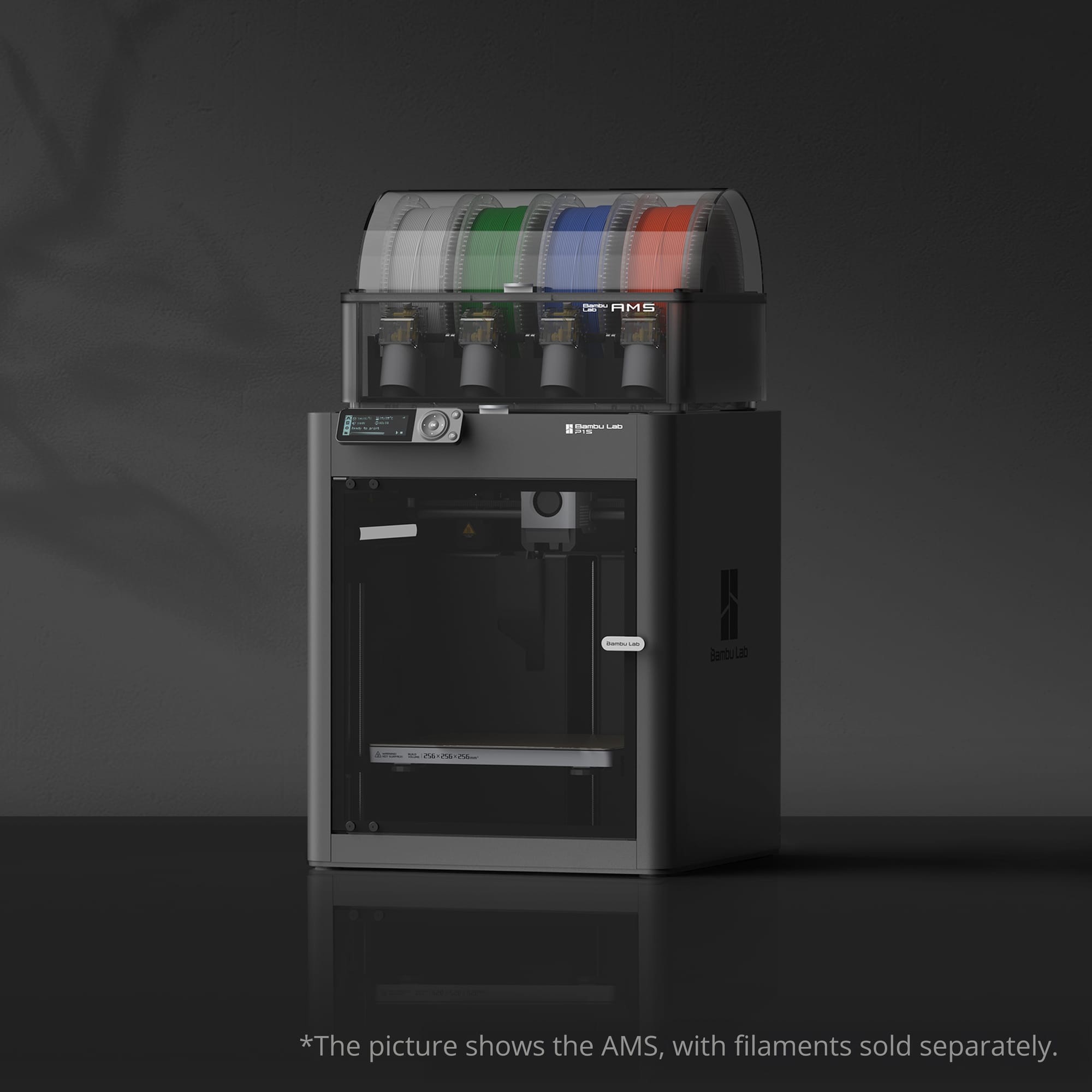
After much consideration, we are certain that the Bambu Lab P1S is the perfect enclosed 3D printer for all individuals.
For beginners who have just started to experiment or wish to enhance their skills, this is a godsend. This fully enclosed option has a 256 × 256 × 256 mm build volume and a maximum listed toolhead speed of 500mm/s. From ABS to ASA, it is suitable for a huge variety of filaments.
The plug-and-play setup, along with its quiet operation and carbon filters, makes it an ideal choice. You could keep it anywhere without worrying about safety issues.
The cost is a bit higher, around $599, but given the advanced features, it is justified.
Best Open 3D Printer for Beginners
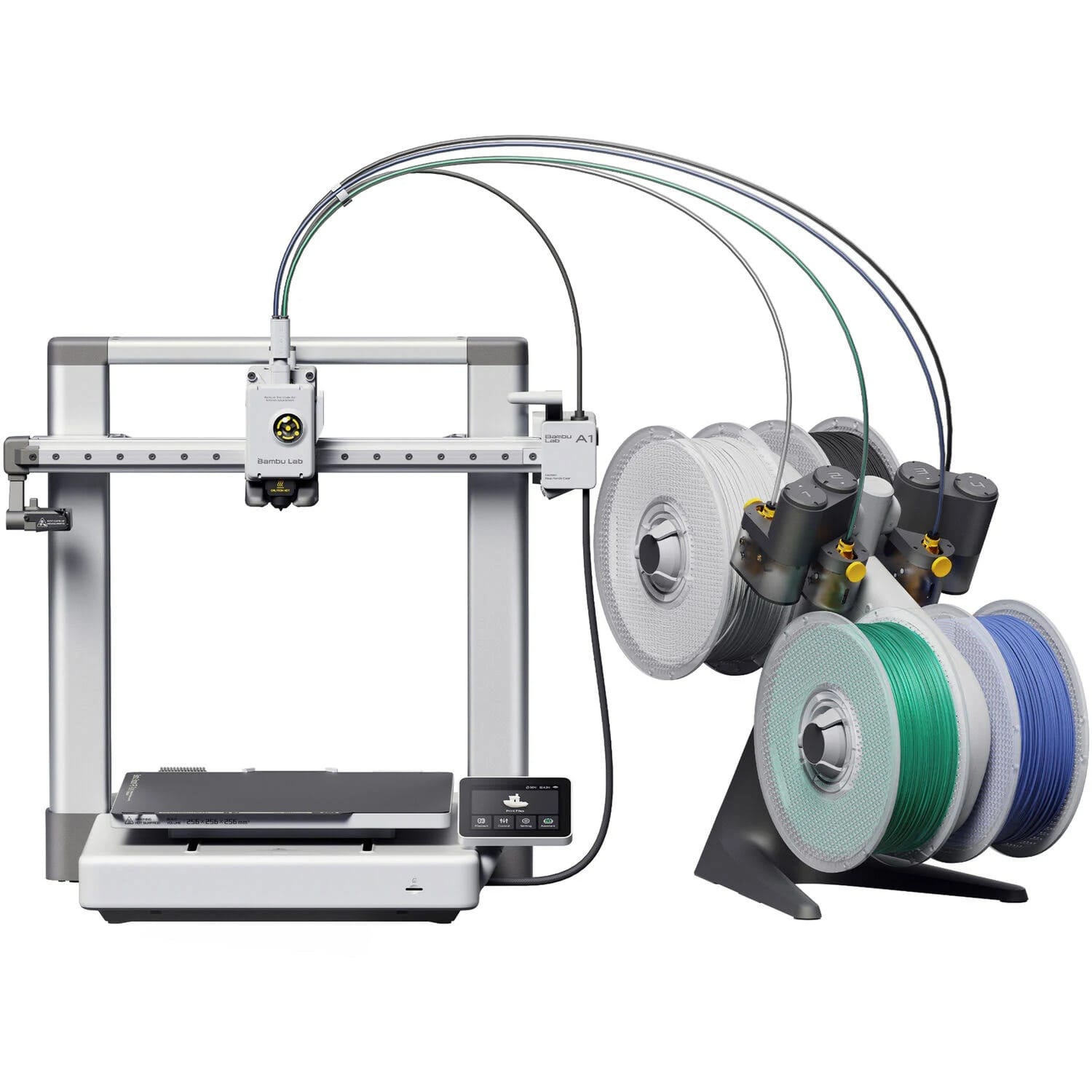
For those of you who wish for an open option, we suggest buying the Bambu Lab A1. It provides a 256×256×256 mm build volume and a 500 mm/s printing speed at $399. Having a touchscreen auto-calibration system, it is great to use with materials like PLA, PETG, and TPU.
Being a beginner, you could easily see the entire printing process and reach the build plate whenever needed.
So, you get speed, a more affordable price range, and can even add a DIY enclosure later on.
FAQ
Which is better, an enclosed or open 3D printer?
The answer depends on your choice of filament and the environmental conditions. Enclosed printers are essential for ABS and ASA. For PLA, an open printer is usually better since PLA benefits from fast cooling. So, your requirements determine your choice.
Is it worth getting an enclosed printer?
Yes, an enclosed printer is worth purchasing if you wish to avoid fumes, heat, and noise. However, if you're only working with PLA, there is no need to spend on an enclosed printer.
Does PETG print better enclosed or open?
An open framework is better for PETG. Using enclosed setups can worsen the stringing problem in such cases.
Does a 3D printer need to be enclosed?
Not necessarily. If you're working with materials like ABS, ASA, Nylon, or PC, then yes, an enclosed option is a must; otherwise, any open 3D printer will do just fine.
Are enclosed 3D printers safer?
Yes, enclosed printers are considered safer because they provide a barrier against hot parts, trap the fumes, and reduce noise.
Comments ()